

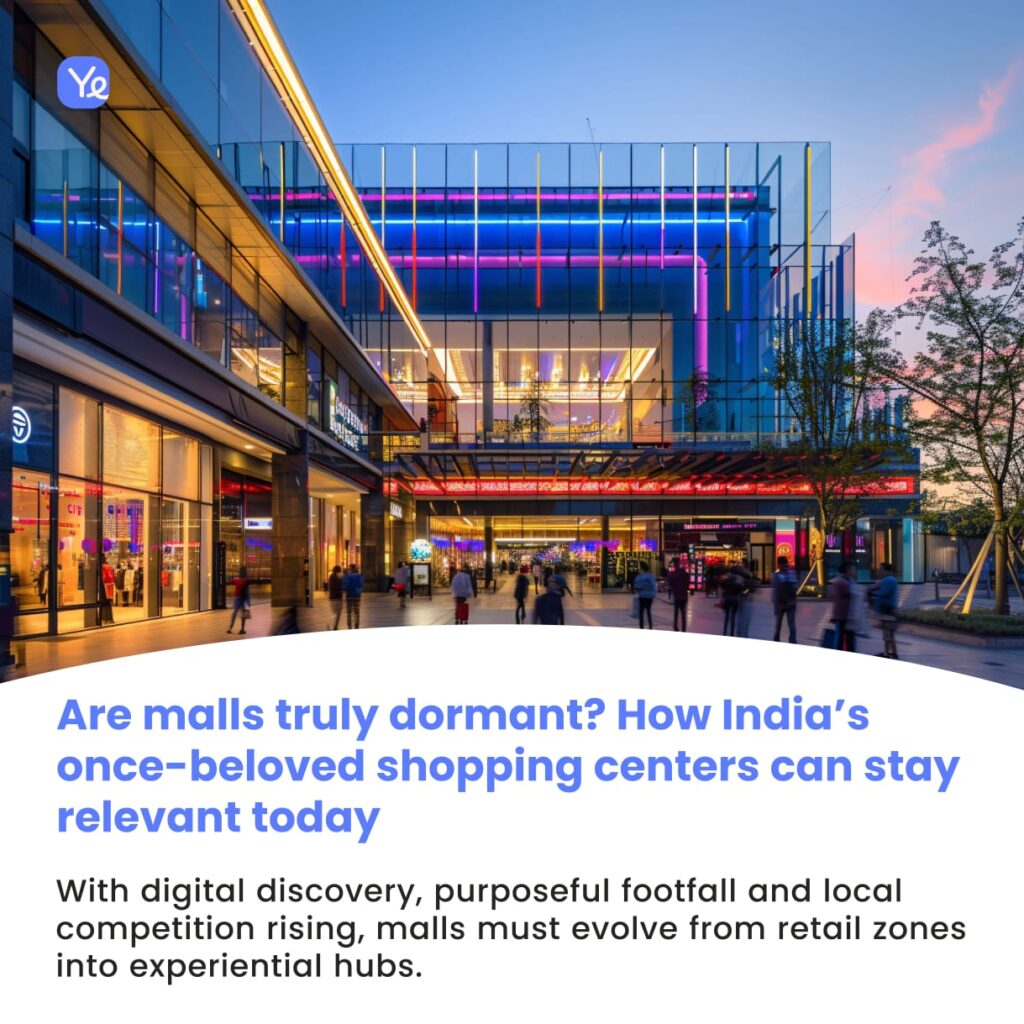
With digital discovery, purposeful footfall and local competition rising, malls must evolve from retail zones into experiential hubs.
Let’s call it what it is. Malls in India are going through a bit of an identity crisis.
Once the weekend havens of a buzzing middle class, today many shopping centers find themselves ghosted by the very audience they helped shape. Who, you ask? The aspirational urban Indian.
The culprits? E-commerce, 10-minute delivery apps, glitzy mega malls stealing the spotlight from the age-old ones and a generation that discovers everything — from products to people — online first.
And yet, malls matter. More than we think.
Why?
Malls are more than just retail spaces. They are social destinations, cultural touchpoints and climate-controlled escapes from India’s bustling urban chaos. They offer something no online platform can replicate which is experiential commerce.
So, what has changed?
The answer is how people discover brands!

Shoppers are no longer walking in blind. They’re past the glorious window shopping days and have alternative pubs to be at to chill. They browse catalogues online, compare prices, hunt for offers and plan store visits in advance and mostly only for special occasions. In other words, impulse-driven footfall is down, while intention-driven visits are on the rise. And, so, a mall that doesn’t help people preview what’s inside will lose out.
Where lies the problem?
Surprisingly, many malls still don’t have a functional website and for a handful of others, the information online is outdated. That is a serious miss in the AI era.
From high streets and branded showrooms to curated pop-up experiences, shoppers are spoilt for choice. Malls must differentiate themselves with more than just a long list of brands.
The reinvention of retail: What India’s malls must do to stay relevant

- Go digital, but stay physical Malls should invest in platforms that make their stores discoverable online without moving the transaction online. Apps like Yett help shoppers explore what's new, what’s on sale and what events are happening, all before they step in. This helps drive intent-based footfall, not just casual wandering. In short, let them know what’s worth showing up for!
- Become hyperlocal hubs Malls should reflect the cities they’re in. Tread beyond the Mother’s Day celebrations, dive into the regional festivities to celebrate local tradition and culture, food and fashion. Malls that host community events, local art showcases, poetry slams, etc with local talent can create a deeper emotional connect.
- Turn stores into stories A mannequin in a window doesn’t cut it anymore. Think: AR try-ons. Live demos. In-store gigs. Influencer pop-ups. Shopping should feel like entering a feature film, not scrolling through a catalogue.
- Empower brands with visibility It’s time to upgrade the brands too. They need a platform to showcase their stories, portal to update their offers, catalogues, host live events and connect directly with customers. Moreover, every store inside the mall must be digitally visible and searchable.
- Rethink the tenant mix Curate more than just big brands. Bring in new-age D2C labels, local heroes and fresh formats like concept stores, co-retail spaces or immersive experience zones, co-working spaces and experiential dining places.
Let people turn up for more than just a purchase!
Success stories

Several malls have cracked the code for thriving and they’re utilising strategic positioning and innovative approaches to excel. For instance,
Phoenix MarketCity, Pune pioneered India's experiential mall format with events, dining and constant store refreshes, in turn, attracting throngs of people. This model has successfully expanded to Tier-2 cities like Lucknow and Indore, proving large-format malls can work wonders!
VR Surat transformed retail by integrating cultural spaces including art galleries and amphitheaters, making it a community cynosure rather than just a shopping destination. This culture-commerce blend has become a blueprint for Tier-3 city developments.
Lulu Mall, Lucknow brought international standards to Uttar Pradesh with 2+ million sq.ft. of space, an indoor amusement park and 200+ brands. Drawing weekend crowds in the tens of thousands, it captures demand from across eastern UP, showing that quality infrastructure creates its own market.
Quest Mall, Kochi proved that luxury retail can work incredibly well in Tier-2 cities by housing Gucci and Versace for the first time outside metros. Its success has convinced luxury brands to reconsider their geographic strategies.
Finally, here’s why innovation is the key
As one industry CEO summarised: “Retailers who combine data, local insight, premium experience and digital innovation will emerge as the real winners.” retail.economictimes.indiatimes.com
In essence, success in the current landscape means viewing each city as a unique market with consumers who are equally demanding and deserving of world-class retail experiences. Because when a mall becomes more than a market, it is capable of turning into a memory — a memorable experience.

